
;Crop=(0,0,4096,2732))
What Midlife Women Want
For many women, midlife is a season of change and discovery. It is a time when you may get to know your body and mind a little better, with a few new challenges along the way, such as a dip in energy, moments of brain fog or a change in mood. [1] Alongside this, midlife can bring greater confidence, clarity and a focus on what really matters.
To learn more about the challenges midlife women are facing, we explored the most Googled questions over the last year relating to the menopause and consulted with experts to give clear, actionable advice to women facing these struggles.
;Crop=(0,0,4096,2732))
What midlife women want to know about beauty
;Crop=(0,0,5464,3116),gravity=Center)
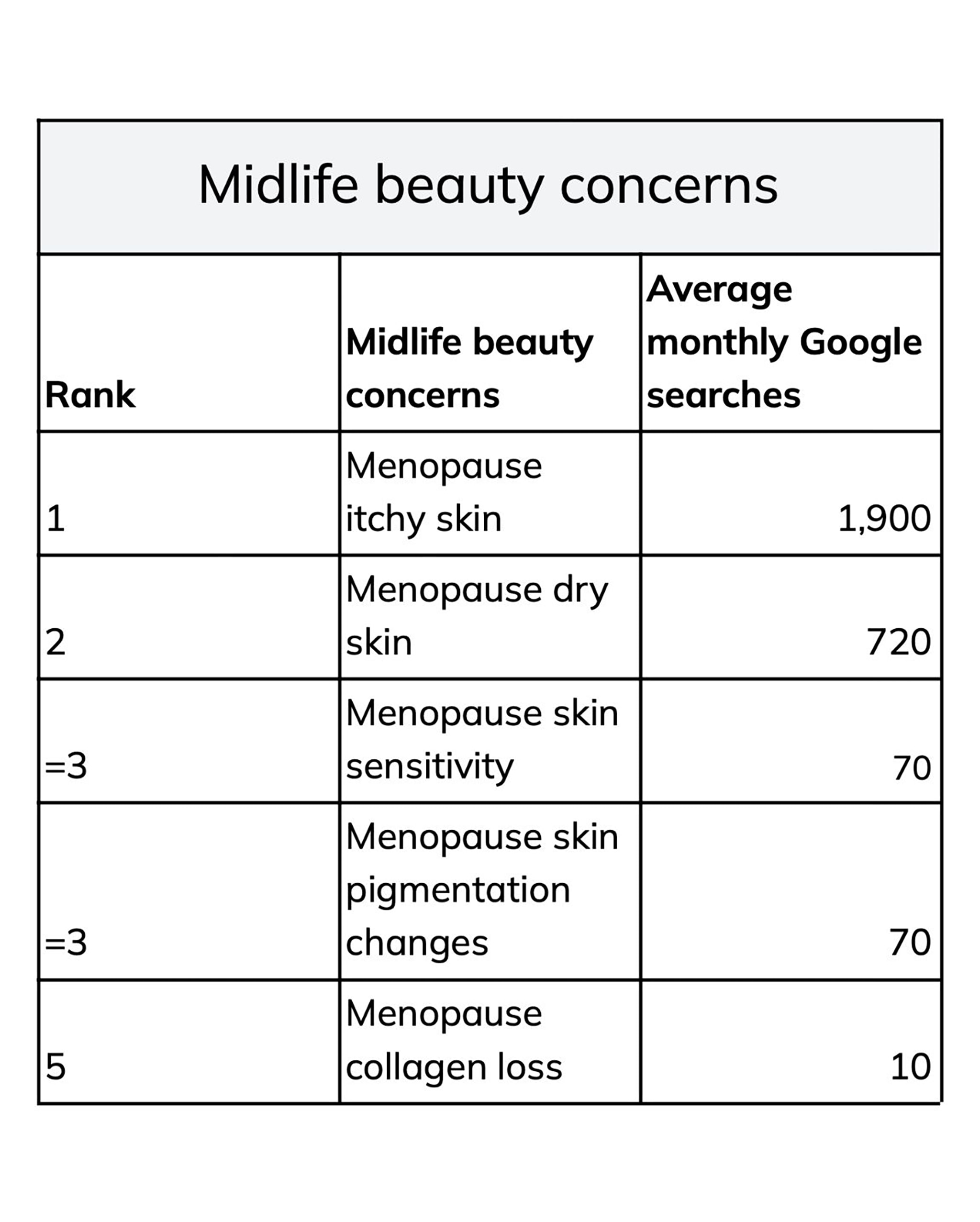
As part of our research, we analysed Google searches over the last year for common menopause-related beauty concerns to identify the issues women most frequently seek guidance on. The data reveals that problems such as itchy or dry skin remain significant concerns for midlife women, who are more likely to turn to the internet for solutions than to friends, family, or even health professionals.
Midlife beauty concerns
1. Itchy skin
Itchy skin is the most Googled menopause-related beauty concern in the study. According to Jane Pangbourne, a menopause nutritionist and hormone replacement therapy expert, this is often linked to fluctuating oestrogen levels. Many women also report that during menopause, their skin can feel prickly or crawly, or that they experience sensations similar to pins and needles. [2]
The Online Menopause Centre advises managing itchy skin with a combination of lifestyle changes, supportive skincare and medical advice if symptoms are severe or persistent. Small adjustments can make a noticeable difference, such as eating more vitamin E-rich foods to support skin health, including almonds and avocados. Drinking plenty of water and maintaining a diet rich in essential fatty acids and antioxidants can also help keep skin feeling comfortable. [2]
A gentle skincare routine plays an important role, too. Using mild cleansers and nourishing moisturisers can help soothe irritation, while avoiding products that strip the skin of its natural oils may reduce dryness and itching. [2]
2. Dry skin
Dry skin is another common skin-related concern during menopause, with an average of 480 Google searches recorded in November 2025. Experts suggest this is linked to declining oestrogen levels, as the hormone plays a key role in helping the skin produce substances that maintain moisture. [3]
Alison Bladh, women's hormone expert and specialist nutritionist for women over 40, explains that managing dry skin during menopause is most effective when diet and skincare are considered together. She recommends reducing caffeine intake and prioritising foods rich in omega 3, such as oily fish, walnuts and chia seeds, alongside healthy fats including extra virgin olive oil, avocados and pumpkin seeds.
From a skincare perspective, Alison advises choosing ceramide-rich moisturisers to help support the skin barrier and avoiding very hot showers, which can further dry out the skin.
=3. Skin sensitivity
Some women notice their skin becomes more sensitive during perimenopause, feeling tighter, drier or more easily irritated. [4]
In these cases, experts recommend opting for laundry detergents that are specifically formulated for sensitive skin. [4] The same approach can be helpful when choosing body washes and moisturisers, as gentle ingredients are less likely to aggravate the skin.
=3. Skin pigmentation changes
Melasma is a skin condition commonly linked to hormonal changes during pregnancy and menopause. [5] It causes brown or grey patches to appear on the skin, most often on the face, though it can also develop on other areas that are exposed to sunlight. [5]
One of the easiest and most effective ways to manage melasma is to limit sun exposure and use SPFs consistently throughout the year, including during the winter months. [6]
5. Collagen loss
Rapid collagen loss during menopause is often found as a key reason for sagging skin,with reports suggesting that women can lose up to 30% of their collagen within the first five years of menopause. [7]
Alison Bladh comments,
“Declining oestrogen affects collagen, elastin, hydration and circulation in the skin. Hormonal shifts can also change oil production, which is why some women become drier while others experience breakouts. Stress, sleep quality, gut health and nutrient status all influence how the skin and hair look and feel.”
If you are noticing changes in your skin’s elasticity, there is no need to worry, as Alison highlights a range of foods that can help support skin, hair and nail health.
Collagen supporting foods: bone broth, slow cooked meats, chicken skin, sardines with bones and gelatine rich stews. These provide amino acids that support collagen and tissue repair
Protein: essential for collagen, keratin and healing (eggs, fish, poultry, tofu, Greek yoghurt, beans) Vitamin C rich foods: berries, citrus, kiwi, peppers and broccoli to support collagen formation
Healthy fats: avocado, extra virgin olive oil, nuts and seeds to support hydration and elasticity
Omega 3s: oily fish, walnuts and chia seeds to support inflammation and dryness Zinc and silica sources: pumpkin seeds, beans, oats, seafood and wholegrains for hair and nail strength
What midlife women want to know about health
In addition to beauty concerns, midlife women are increasingly focused on maintaining their overall health. Key factors such as regular exercise, balanced nutrition, and quality sleep play a crucial role in managing the changes that come with menopause. Our research shows that women often seek guidance online to understand how to stay active, eat well, and improve sleep.
1. Joint and muscle pain
Joint and muscle pain is often caused by reduced levels of oestrogen and progesterone which occurs during menopause. [8] And it appears to be a key concern for midlife women in the UK with over 200 Google searches in November 2025 alone.
Emma Gordon, personal trainer, ambassador and founder of Emergy Life says that many midlife women avoid strength training or impact-based exercise because they’re fearful of making joint pain worse.
For women who are experiencing joint and muscle pain as a result of the menopause, Emma suggests starting with careful and considered exercises such as using resistance bands, chairs, wall-based exercises such as sit-to-stand squats, step-backs instead of lunges and incline push-ups instead of floor push-ups.
However, Emma also highlights that if you’re experiencing persistent joint pain, old injuries are flaring repeatedly, or pelvic or back pain during exercise you should seek support from a doctor or physical therapist.
2. Muscle loss
Another side effect of declining estrogen levels during menopause is muscle loss and it’s reported that 80% of women experience symptoms such as a loss of muscle mass and bone density during the menopause. [9]
When experiencing muscle loss, menopausal women might notice more muscle related injuries and slower healing, [9] making it more difficult to commit to a regular exercise routine.
To combat this, experts suggest regular, considered movement and exercise is the best way to maintain muscle mass. [9]
3. Menopause muscle cramps
Similar to muscle aches, cramps can be equally painful and annoying to deal with. Experts say that the decline in oestrogen can cause more inflammation and friction in joints and stiffness in tendons and ligaments. [10]
Emma highlights that while mild discomfort during or after exercise is normal, if you experience sharp pains, worsening pain, or pain that lasts more than 48 hours, you should seek support or adjust your exercise routine.
Other lifestyle changes in midlife
1. Sleep
Personal trainer Emma Gordon says midlife women often report low energy levels and disrupted sleep. To combat this, Emma recommends getting natural light exposure in the mornings. While this can be tricky during the winter months, opening the windows or standing outside each morning for at least 15 minutes can help regulate sleep patterns and even promote alertness during the day. [11]
Alongside this, menopause expert Jane Pangbourne comments on ways to encourage better sleep,
“Sleep challenges can be due to so many factors but if a sleep pattern has changed and it seems to be cyclical, then hormone changes are a great place to start. Aside from bringing in a good safe, HRT regime if menopause is the challenge, I would suggest adding in a magnesium glycinate at around 400mg a night (glycinate is very gut friendly so useful if bloating and gut disruption is also a problem). I also find that taking the pressure off yourself to have a ‘full 8 hours a night’ is key to the mindset around sleep.
“I encourage many of my clients to take a ‘2 sleeps a night’ approach so when they wake and cannot get back to sleep, to get up and make a warm drink (not milk or tea) and relax away from the bed but with no TV or tech to overstimulate them. Then when they feel more relaxed, they return to bed and see if they drift off - This used to happen a lot before we lived our lives as we do today and I find it really helps reduce worry and stress whilst encouraging quality sleep.”
If you’re suffering from hot flashes at night and it’s disturbing your sleep, we recommend trying cooling bedding, or more breathable fabrics like cotton sheets.
2. Pelvic health concerns
According to Emma, issues such as pelvic floor weakness, bladder leaks and core instability or back pain are all common experiences for midlife women.
Emma highlights how these concerns can often lead women to avoid exercises involving lifting, jumping or certain everyday classes altogether due to feeling embarrassed or unsure where to turn to for help.
For women experiencing these symptoms, Emma reiterates that pelvic floor issues are common and (thankfully!) treatable. Firstly, try improving core strength and overall posture with slow, controlled movements rather than high impact exercises. Likewise, reduce load, speed or impact while slowly building strength.
However, if you’re experiencing regular bladder leakages, pain or heaviness when exercising, or your core weakness is affecting your daily life, Emma says it’s always best to consult with a health professional.
3. Bloating
Bloating, or feeling uncomfortable, is common for women during the menopause due to low oestrogen levels.
We spoke with Jane Pangbourne about how women experiencing bloating can overcome this.
“For the next seven days make a note of EVERYTHING you eat and drink and at the end of each day note how you feel; tired, hyper, bloated, sore? This should help you to work out what helps and what hinders your own health.
“It feels difficult to work out the cause because everything seems to be the cause, but when we combine changes to eating habits, plenty of water and movement plus HRT to balance those hormones, things can feel a lot calmer. “I often suggest the food diary for just a week to see whether any new food intolerances have developed (quite common in peri menopause), for example, some people may find that they no longer tolerate raw vegetables which are more difficult to digest partly due to the tough insoluble fibres so can result in bloating or gas.”
4. Hair thinning
When it comes to hair changes in midlife, Alison Bladh comments, “In my clinical practice, I see just how deeply skin and hair changes can affect women in midlife. These shifts can feel surprisingly emotional, yet many women rarely talk about them openly. As hormones fluctuate, oestrogen declines and collagen production slows, women often notice changes in their appearance faster than expected. Even women who feel they are coping well in other areas can feel unsettled by what they see in the mirror.”
Alison suggests that hair thinning is a commonly experienced issue among midlife women, including increased shedding or loss of volume.
Although if you experience sudden or severe hair loss you should consult with a health professional, there are a few ways you can help to boost hair quality through your diet.
According to Alison, increasing protein intake and eating plenty of iron rich foods can help to promote healthy hair regrowth and maintenance. Alongside this, checking your ferritin levels can help to determine whether your iron levels are normal. Although less common, low ferritin can sometimes lead to hair loss. [12]
5. Stress and anxiety
Midlife can be a time of significant change, and for many women, it is also a period when stress and anxiety can peak. Hormonal shifts and life transitions can leave women feeling overwhelmed and under supported.
Alison comments on the impact of stress and anxiety during midlife:
“Midlife is often described as a “pressure cooker” stage. Women are juggling demanding careers where there is often little understanding or support for menopause symptoms, ageing parents, children who still need support, relationship changes and financial pressures. Add hormonal fluctuations on top and it becomes clear why anxiety, irritability and a loss of confidence are so common. Many women say they feel overwhelmed, on edge or unlike their usual selves, yet they often blame themselves rather than recognising the enormous load they are carrying.”
According to Alison, balanced nutrition and small lifestyle changes can help midlife women manage stress and anxiety. Regular meals with protein, healthy fats and fibre, alongside omega‑3 and magnesium-rich foods, support mood and calm the nervous system, while limiting processed foods, excess sugar, caffeine and alcohol can reduce mood dips.
Alison also highlights simple daily habits such as slow breathing and morning daylight ease overwhelm and anxiety. Starting with small, manageable steps, seeking support and replacing unhelpful habits with calming alternatives can make a real difference.
However, where anxiety or low moods become persistent or begin to affect daily life, Alison stresses the importance of seeking professional support.
;Crop=(0,0,4096,2732))
Influential women defining midlife style
;Crop=(0,0,5464,3116))
Global celebrities and adored women such as Kate Middleton, Victoria Beckham, Kate Moss and Naomi Campbell top the list as the most influential fashion icons for midlife women, each harnessing the power of their own style to inspire women around the world. From Kate Middleton’s chic longline jackets to Claudia Winkleman’s stylish knitted jumpers, these women show that confidence, individuality and a willingness to experiment can redefine fashion at any age.
We spoke with Monica Wahla, Head of Buying, Quality & Fit at JD Williams who comments;
"These women are redefining the narrative of midlife dressing by prioritising individuality over 'rules.' We see women gravitating toward Naomi Campbell’s boldness or Victoria Beckham’s precision because they represent a refusal to fade into the background. Recreating their influence isn't about a carbon copy; it’s about adopting their 'uniform' mentality. Start with one hero piece, like a perfectly fitted blazer or a statement knit, and build the outfit around how that piece makes you feel. Confidence is the ultimate accessory they all share."
Methodology
The research examined Google search data collected in December 2025, relating to commonly experienced beauty and health concerns associated with the menopause in November 2025.
To assess the most influential women in midlife fashion, the study compiled a list of well-known celebrities aged over 40 and used BuzzSumo to analyse the frequency with which they were referenced in fashion-related articles over the past year. The prevailing sentiment and most common audience reactions within these articles were also recorded.
Sources
[1] Pause Live, ‘Why Midlife Women Are Struggling With Emotional Wellbeing – And What We Can Do About It’ , 2025
[2] Online Menopause Centre, ‘Itchy Skin Menopause - Causes and Treatments’
[3] Dr Louise Newson, ‘Skin changes during perimenopause and menopause’ , 2025
[4] Always Discreet, ‘5 sensitivities of menopause (and how to deal with them)’
[5] Dr Louise Newson, ‘Melasma and menopause: what you need to know’ , 2025
[6] British Skin Foundation, ‘Melasma’
[7] Vichy Laboratoires, ‘Menopause and collagen loss: why does my skin sag?’
[8] The Better Menopause, ‘Why your painful, aching muscles could be menopause, not just age’ , 2024
[9] Hinge Health, ‘Musculoskeletal Syndrome of Menopause: Causes, Symptoms, and Exercises for Relief’ , 2024
[10] Bupa, ‘Are muscle aches and joint pains linked to the menopause?’ , 2024
[11] WedMD, ‘Get Morning Light, Sleep Better at Night’ , 2022
[12] NHS, ‘Iron deficiency anaemia’ , 2024
Like what you’ve just read?
Follow JD Williams on Google to see more of our content in your results. No sign-up required—just great content directly in your feed, saving your inbox for the big updates. You can change your preferences with Google at any time.
 Follow us on Google