
;Crop=(0,0,4096,2732))
Meno-un-pause: Because midlife deserves the spotlight
Midlife isn’t about slowing down, it’s about moving forward with confidence, style, and self-focus.
Our Meno-un-pause campaign is here to challenge outdated narratives. Too often, this stage of life is framed as decline. But for millions of women, it’s a time of reinvention, resilience, and unapologetic self-expression.
Through new research, the voices of real women, and expert advice, we’re putting midlife centre stage.
The reality check
We surveyed 1,000 women 45+ across the UK to find out how menopause has impacted them.
;Crop=(0,0,5464,3116),gravity=Center)
It turns out… the fashion industry has work to do. 53% of women 45+ feel neglected by fashion and only 1 in 14 feel truly represented. It’s clear that midlife women deserve more visibility, authenticity, and choice.
Esme Stone, Group Head of Marketing for JD Williams & Heritage, commented on the research:
"Our research shows that midlife women are seeking style that reflects their confidence, individuality, and changing needs, not trends that overlook them. They want clothes that make them feel seen and supported, whether that’s a comfortable yet flattering dress, a versatile top or t-shirt, or a cosy jumper or cardigan. At JD Williams, we’re committed to offering pieces that combine style, comfort, and confidence, helping women navigate this stage of life with ease and self-expression."
Investing in yourself
Menopause isn’t just about physical change, our survey shows it also reshapes where women choose to spend their time, energy, and money.
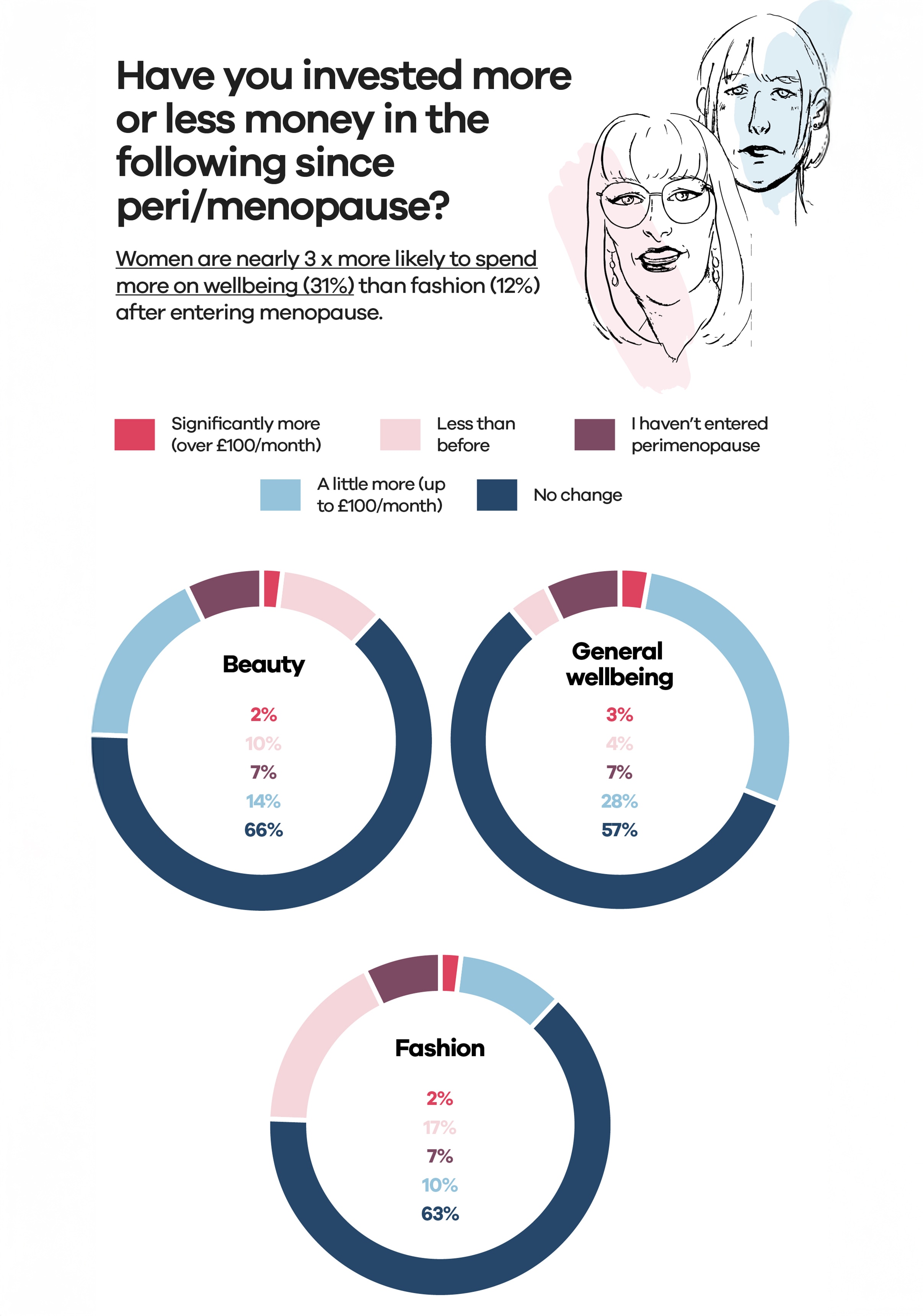
Wellbeing tops the list, with nearly a third (31%) spending more to support their health, making women almost three times more likely to invest in wellbeing than fashion (12%).
Beauty remains steady, with most women reporting no change (66%), though 16% are spending more to adapt routines or boost confidence.
Fashion sees the least uplift, with only 12% increasing spend, possibly reflecting the fact that women don’t feel seen by the fashion industry.
Laura Clark, a registered dietician who specialises in Menopause nutrition, shared some valuable insight on the research:
“This doesn't surprise me, the menopausal transition brings about huge shifts in how women feel physically and emotionally and there is a greater awareness now of how lifestyle changes can support us during this time. Going through the menopause marks a new chapter and an opportunity to change perspectives on how to nourish our bodies and minds.”
Dr Laura Wyness, Registered Nutritionist, published author, podcast host and public speaker on nutrition and public health comments our findings:
“It's encouraging to see that wellbeing is a top priority for women around menopause. Looking after your health as you approach and go through this stage can help ease the transition. Paying attention to your diet around menopause is really useful to ensure what you're eating is providing the nutrients your body needs. Eating well supports bone and heart health, helps manage weight, and can even ease some common menopausal symptoms.”
Reimagining beauty routines
Midlife beauty isn’t about chasing youth, it’s about redefining what feels good and works for real lives.
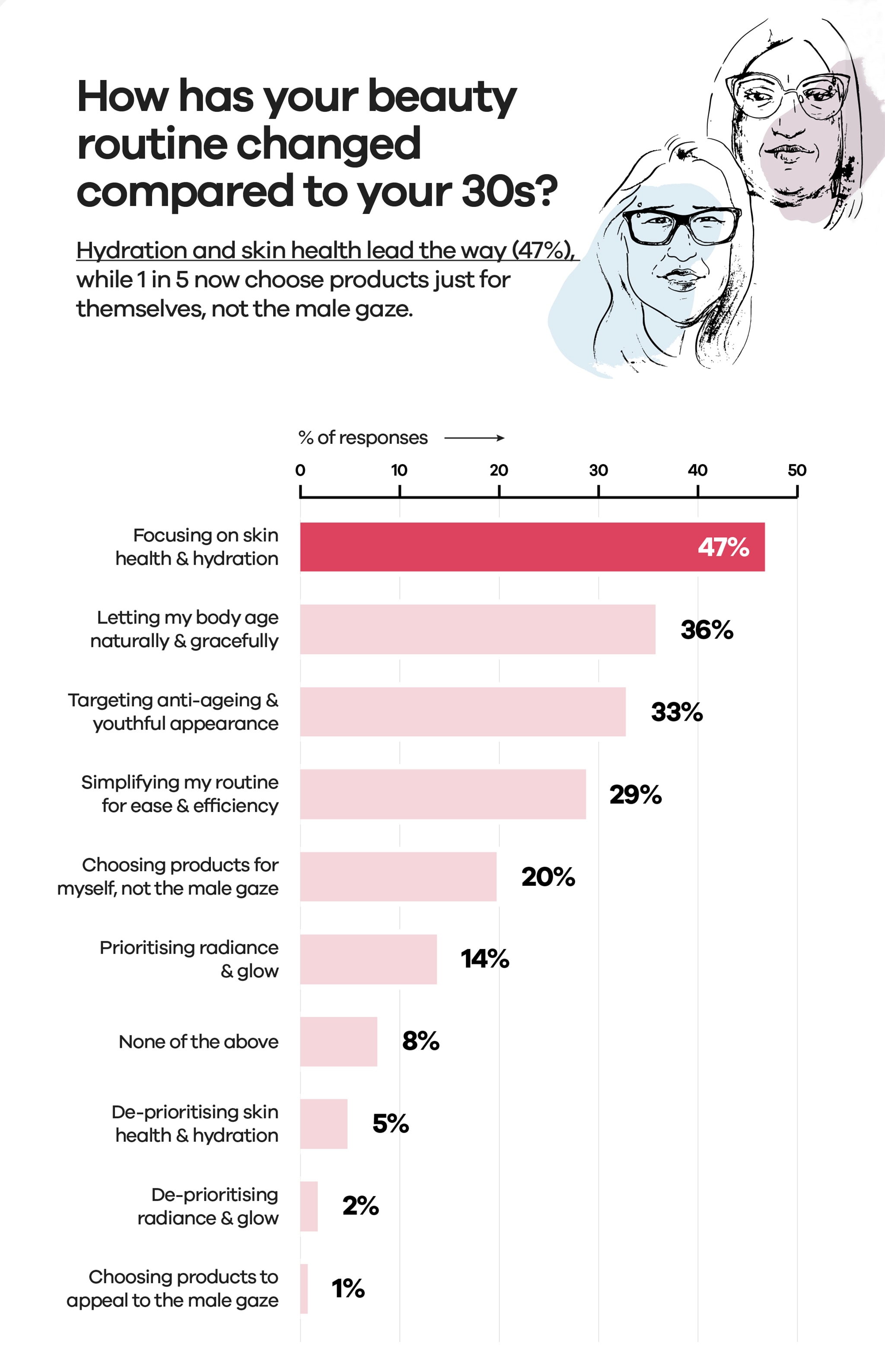
Skin health and hydration are now the top priority for almost half of women (47%), signalling a shift toward wellness over aesthetics. This is backed up with the move towards natural and graceful ageing, which is embraced by over a third (36%). Radiance hasn’t been forgotten, with 14% prioritising glow, adding a touch of vitality to wellness-led routines.
Despite this shift, a third (33%) still value anti-ageing products, showing midlife women want choice, not one narrative. Efficiency matters too, with 29% simplifying their routines, choosing ease and time-saving over complexity.
Beauty has also become more personal: 1 in 5 (20%) say they now choose products for themselves, not the male gaze.
These results highlight a clear shift: midlife women are reshaping beauty on their own terms, blending confidence, practicality, and individuality.
The mental load
Midlife can bring a heavier mental and emotional load, and our research shows just how deeply it impacts daily life.
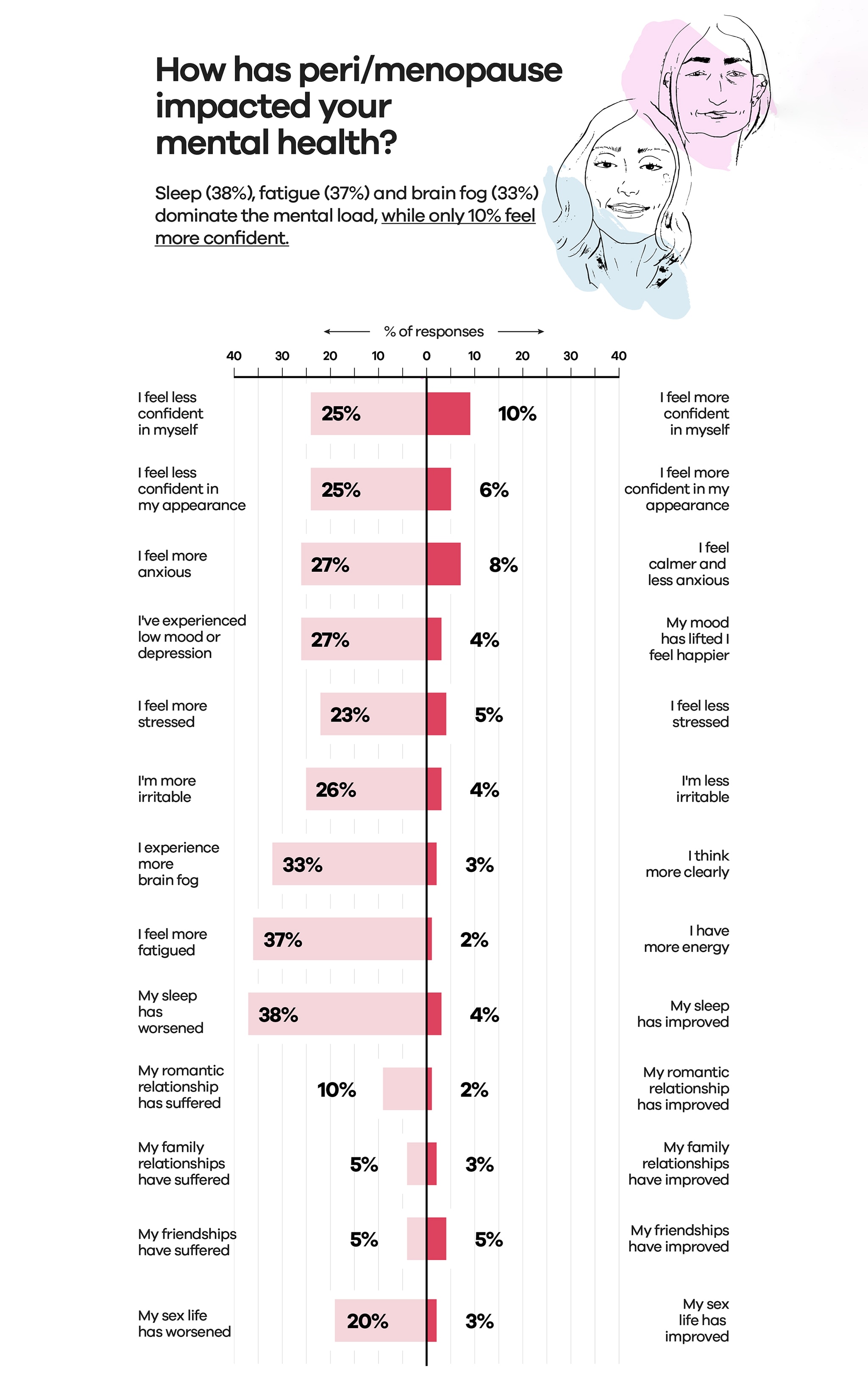
Sleep is the biggest struggle, with 38% of women saying it has worsened. With that in mind, it’s not surprising fatigue (37%) and brain fog (33%) are also next in line, disrupting energy and focus.
Dr Laura Wyness, a nutritionist who supports women navigate the challenges of peri-menopause and menopause, shares further insights on the findings:
“I'm not surprised that sleep is the biggest struggle, with fatigue and brain fog not far behind. Sometimes small adjustments to your diet, like increasing fibre-rich foods, spreading protein foods across the day, and hydrating early in the day, can make a notable improvement. Including a variety of fibre-rich plant foods such as vegetables, fruit, beans, nuts and seeds supports your gut microbes. Only 2% of UK adult women (aged 19-64) meet the recommended 30g of fibre a day.”
She shares her recommendations on how to tweak your diet during this phase of life:
“Eating a 'rainbow' of fruit and veg provides important nutrients and phytonutrients with antioxidant and anti-inflammatory benefits. A healthy and diverse gut microbiome supports hormone balance, and can help ease menopausal symptoms. Since the majority of the body's serotonin ('the happiness hormone') is made by gut microbes, eating well for your gut microbiome can support your mood, and may help manage anxiety and improve sleep.”
Confidence also takes a hit: 1 in 4 women feel less confident in themselves (25%) or in their appearance (25%). This has a knock on effect on emotional wellbeing, with more women reporting anxiety (27%), low mood (27%), irritability (26%), and stress (23%).
Relationships aren’t immune as a fifth of women say their sex life has worsened, and 1 in 10 report that their romantic relationship has suffered.
But there’s another side to the story. While the challenges dominate, a smaller yet important group report positives, one in ten feel more confident in themselves, while 8% feel calmer and less anxious and 6% feel more confident in their appearance.
Laura Clark, a registered dietician who specialises in Menopause nutrition, shared some valuable insight on the findings:
“It’s tempting to look for a short list of ‘mood-boosting foods,’ but the reality is that no single ingredient is a magic bullet. What really helps is an overall pattern of eating that supports brain chemistry, hormones, and blood sugar balance.
-
Aiming for a balance on the plate that provides the following is key:
-
Protein, to support the production of mood boosting hormones like serotonin and dopamine, especially
-
Slow-release carbs to keep blood sugars steady
-
A colourful mix of fruit and veg adds the vitamins that help with stress resilience and guard against depression.”
This tells us one thing: midlife is complex. For many, it brings real challenges. But it can also spark resilience, clarity, and renewed self-belief.
How women are combatting these challenges
When menopause brings change, women are finding ways to support their bodies and adapt to new needs.
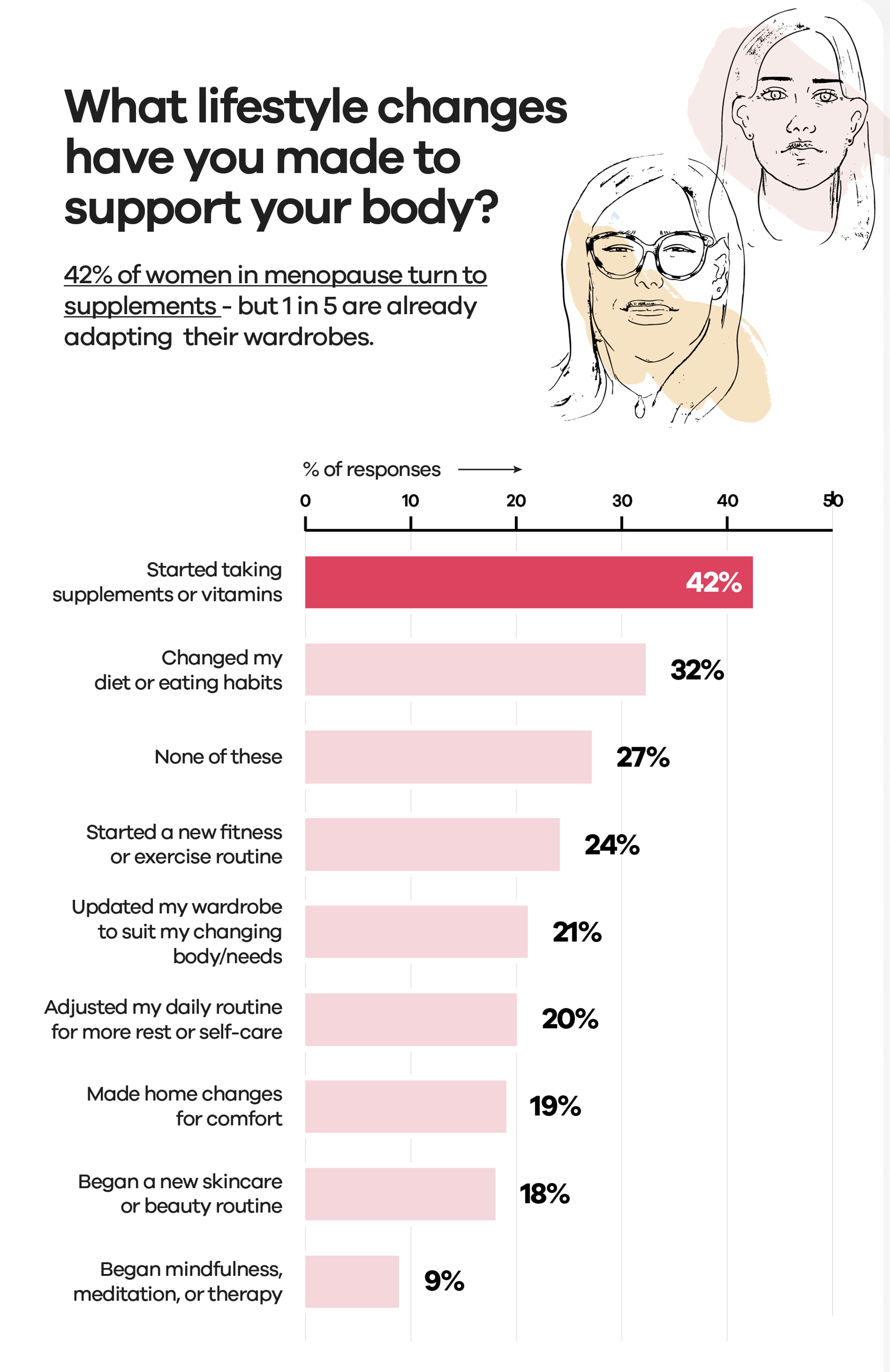
The most common shift is supplements and vitamins (42%), with many looking for an extra boost. This pattern continues as we see diet and eating habits (32%) are the next most common adjustment.
A final comment from Dr Laura Wyness:
“I totally understand why 42% look to supplements for an extra boost, and they can be helpful at times. In fact, supplementing with vitamin D is recommended for all adults. Still, I'd encourage women to start with small, healthy changes to what and how they eat. This will help build a strong, supportive foundation for their overall health and wellbeing.”
A quarter (24%) have started a new fitness or exercise routine, while 1 in 5 (21%) have updated their wardrobes to better suit their changing bodies.
Daily routines are being reshaped (20%), with women carving out more space for rest and self-care. Comfort at home also matters, with 19% making changes to their living spaces. Nearly the same share (18%) are refreshing their skincare or beauty routines.
This shows that supporting the body through menopause isn’t one-size-fits-all. From nutrition to movement, style to self-care, women are redefining what strength and comfort look like for them.
Real women = real confidence
To celebrate the strength, individuality, and honesty of this stage of life, we invited five women to take part in a unique sketch project.
Each was first drawn by an artist using only her own self-description. Then, after meeting her in person, the artist created a second portrait.
The contrast was striking, showing not only how women often underestimate themselves, but also how powerful it is to see midlife women as they truly are: confident, vibrant, and unapologetically real.
But the sketches were just the beginning. We also asked each woman to share, in her own words, what menopause has meant for her, the challenges, the surprises, and the new freedoms.
Here’s what they had to say:
;Crop=(0,0,4096,2732))
Pollie Rafferty
“The best thing I have found about perimenopause and menopause Is the comradery and the wonderful wonderful women I have connected with on this chapter of my story, I have had the pleasure of taking part in the Menopause monologues, happily chat with networking groups about hot flushes and forgetting things, With a chronic illness I have lived with a lot of the symptoms for years now I can see people understanding what It's like and I feel more seen in that. Also a big big bonus is no Periods my menstrual cycle has shut down and closed up shop! Its freeing.”
;Crop=(0,0,4096,2732))
Hannah Cornaby
“Even though I'm going through menopause at a younger age, it's brought me clarity and confidence. I no longer compare myself to others, as I am so different from many people my age, and instead focus on who I am right now. Feeling like I have had a head start at this stage of my life has given me the freedom to put myself and my wellbeing first.”
;Crop=(0,0,4096,2732))
Ali Leese
“There’s so much information and guidance accessible about the perimenopause and menopause nowadays compared to in previous generations. It’s not shrouded in secrecy anymore. TV presenters like Davina McCall and Doctors Louise Newson and Naomi Potter have created a mainstream conversation which has helped support women and create a sense of belonging for this next stage of life that we’re in.”
;Crop=(0,0,4096,2732))
Sally Wallond
“Menopause is the time to be empowered by our life skills to understand our whole self; to attentively listen to the needs of our own body and mind; to generously treat ourselves with kindness and respect and to strongly address the challenges to ensure our own future happiness and well-being. Menopause is our time.”
;Crop=(0,0,4096,2732))
Sally Saint
“The one thing I have loved about the perimenopause journey is that it has made me focus on myself deeply, REALLY caring for myself and slowing down, so moments are truly embraced. I have become more present in moments, and now I have a collection of memories because of that change. It's a profound and gentle change that means a great deal to me.”
Redefining Midlife
Our research, expert voices, and the lived experiences of real women all tell the same story: midlife is not a pause, it’s a powerful progression. Yes, it brings challenges, but it also sparks reinvention, resilience, and unapologetic self-expression.
It’s time for the fashion and beauty industries to reflect that reality, and for midlife women to be seen, celebrated, and supported.
Join us in reshaping the narrative.
Because midlife isn’t an ending, it’s a beginning worth putting in the spotlight.
Like what you’ve just read?
Follow JD Williams on Google to see more of our content in your results. No sign-up required—just great content directly in your feed, saving your inbox for the big updates. You can change your preferences with Google at any time.
 Follow us on Google